The greatest impact Ancient Rome left after its fall to subsequent civilizations and to modern everyday life are its legacies of Roman engineering, republic government, and Roman Law. Roman success with the technology of building and constructing has left its mark on later eras, and even in today’s world, where Rome’s innovations such as bricks, concrete, and brick and mortar masonry are still common. Rome’s idea of a republic, had no less of an impression, where thousands of years later, countries still follow the concept that citizens who hold ultimate power elect leaders who rule on their behalf. The fact many countries still refer to Roman Law and that it continues to be a required topic in law facilities, demonstrates the enormous influence on the development of law in the West. Since Roman engineering has literally formed the building blocks of society for millennia and for today, analysis will begin here.
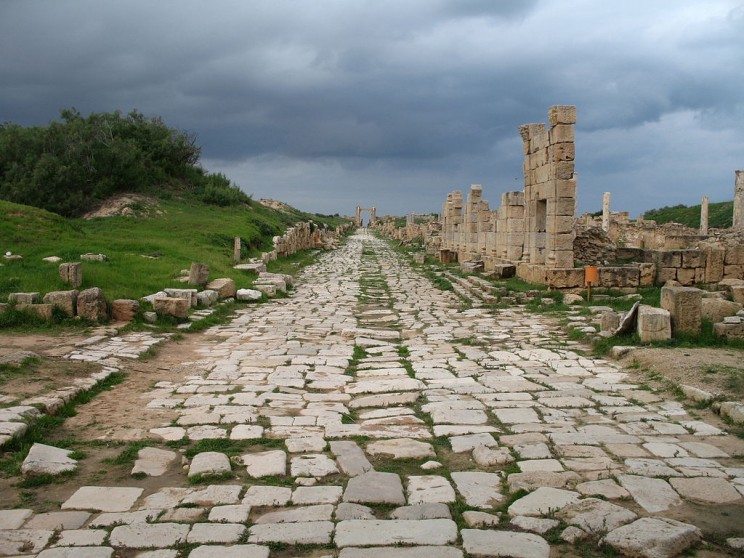
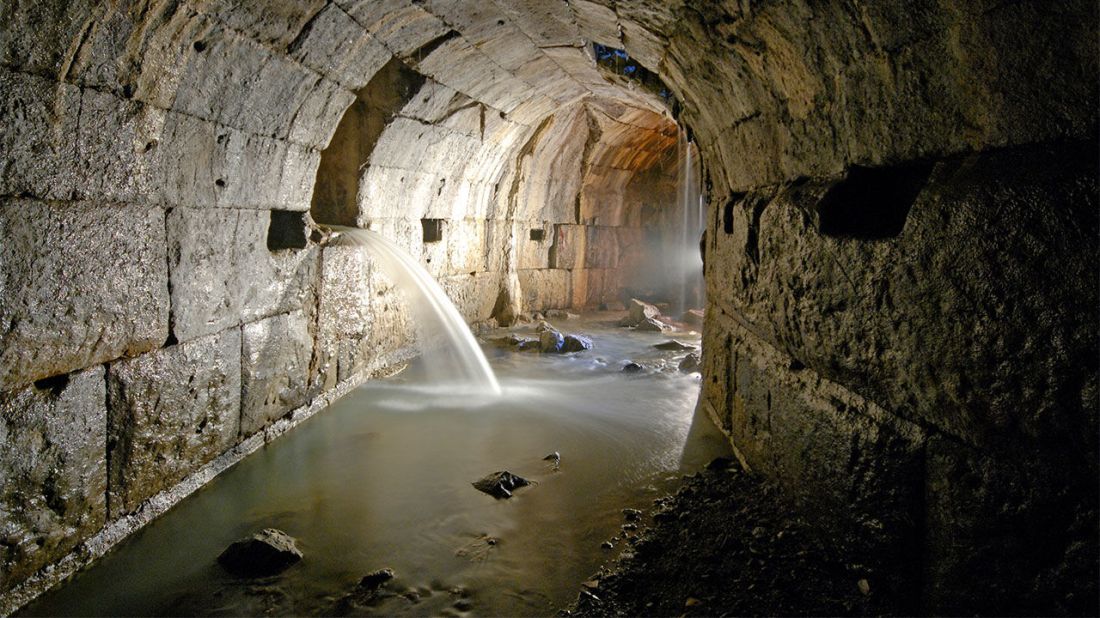
Ancient Rome thrived through the urban-oriented technology that dominated much of its skilled engineering, which produced its many roads, public buildings, and water systems. The Romans found a way to use small, local materials through creating cement, concrete, and brick and mortar, and in turn, this enabled them to create almost any structure that was large, water-proof, and long-lasting. Roman arches, for example, were everywhere, with the Roman aqueduct having the most noticeable application. Using gravity to transport water along pipelines into city centers, it liberated Roman cities from a reliance on nearby water supplies. With this structure established, they were able to produce public baths and bathrooms, and an interlinked sewage line binding them, creating high sewage and sanitary management. Regularly flushed by abundance of water from aqueducts and runoff from streams to keep streets uncontaminated, a network of sewers and gutters also ran along streets, connecting to most houses in the city. The Romans also used their civil engineering skills on constructing route systems. It was one of the main reasons behind their exemplary and successful administration ensuring a fast and efficient movement of goods, soldiers, and information. They were also equipped with the first road signs and mile markers, making them the most sophisticated road system the ancient world had ever seen. Because the encompassing area was so vast, it was said “all roads lead to Rome”.
In Europe and other areas formerly part of the Empire, many aspects of the influence of Roman engineering today remain integral and in application. Aqueducts created the enduring, drastic changes to the hygiene and wellbeing still felt by the billions today. The concepts behind the sanitation framework, which are still prevalent, showed as civilizations became more advanced and populous they still had to provide relatively safe and portable water. By creating a sanitation structure of public toilets, underground sewage systems, fountains, aqueducts, and public baths where complex, but organized water services became vital parts of society, civilizations could promote public wellness and sanitation. Meanwhile, the Roman route system developed the concept that effective administration required developing civilizations to provide urban populations with safe, navigable travelling systems to connect cities, which is also predominant now. This ensured people had a quicker and more effective way to journey, and that domain management was improved through good military purposes and economic stimulation through trading. While serving other needs of an urban and imperial nation, Rome’s monumental architecture and engineering also did not fail to impress people of the classical era and various later periods, including the European Renaissance and America. Significant Roman inventions such as cement, which has become one of the world’s most common materials, and concrete, and brick and mortar masonry have inspired the designs of countless architectural developments. Modern architects have also embraced building patterns such as the arch and barrel vault, like the Kimball Art Museum in Texas built by Louis Kahn in the twentieth century. Rome also impacted other aspects of people’s life through the concept of government, dealing with how people were ruled, so the essay will cover this next.
Rome established the type of government known as a republic where a representative body of voted citizens governed with checks and balances to ensure they made major decisions on behalf of the people, who ultimately held supreme power. Before becoming a republic, however, Rome from its founding in c. 753 BCE to c. 509 BCE, was a monarchy. After they observed their problems of the monarchy, and the Greek’s aristocracy and democracy issues, they chose a varied structure of government incorporating three branches, creating the first republic. The branches consisted of consuls – the monarchial branch, the senate – the aristocratic branch, and the assembly – the democratic branch. Even in the centuries chiefly after Rome’s fall, its idea of a leader ruling a solid, central government who brought control and authority, continued to deeply shape Asian and European governments. The Republic’s notions heavily influenced the branches used, including the executive, legislative, and judicial branches. The Romans’ works were given great reverence as models of democratic ideals and independence, which were especially implemented by American scholars, and then influenced the foundation of numerous modern governments.
Millennia later, republics still exist, such as the US, and with the same idea that power rests with the citizens, who elect people who represent them in the legislative and executive systems. Becoming a republic in 1776, the United States’ political system was heavily influenced by Roman practices and people such as Cicero. For example, the US and Rome both made multiple branches of government – the executive, legislative and judicial branches, where the elected executive branches had safeguards to control the amount of power the leader had. For instance, Roman consuls had a 1-year term, a veto, and a co-consulship to avert them from having too much authority. In the United States, the president’s term was limited to eight years, and his or her power was also limited due to individual states’ significant amount of power and autonomy, but ultimately the leader’s jurisdiction was restricted by safeguards including the Congress, Senate, House of Representatives, and courts. Rome and US both created multiple legislative branches, with the latter having the House of Representatives, and the Senate, which was named after the Roman Senate. The US judiciary system’s legal terms still applied Latin Roman phrases, and preliminary hearings, appeals, and trials by jury, which were Roman concepts. The United States’ Supreme Court had a similar concept to the Roman judicial system that consisted of Praetors who served as high judges, as well. The law and its protection of citizens was based on Roman Law, which will be discussed next.
The first to create law as a discipline was Rome. It covered areas of everyday Roman life including crime and punishment, land and property ownership, commerce, and liability and damage to property. It was defined as the art of goodness and equality by Rome’s jurist Celsus – “Jus eat ars boni et aqua”, which signified and comprehended Rome’s wishes and determination to produce and implement laws, a wish that managed to travel throughout time. Law was codified in the Law of the Twelve Tables in the 5th century BCE since it was important the law was identical across such a large territory. A law called “Lex Aquilia” was created in c. 286 BCE, and introduced the idea of “damage unlawfully inflicted” and cited appropriate penalties which formed the basis of modern Tort law. “Roman law” concerns Ancient Rome’s legal system from its founding in 753 BC until its fall in the 5th century CE, while it was used later in the Byzantine Empire until 1453. Roman law until as recent as the 18th century, symbolized the legal systems used in the significant part of Western Europe. Roman law also influenced the European, American, African and Asian law structure where it shaped the base for the bourgeois civil legislation in many European countries and derivative structures elsewhere.
Law is the greatest and apart from Latin, only unique Roman contribution to the West. Although Ancient Rome fell in 476 CE, Roman Law continued to evolve over the centuries, and remained a main source of inspiration in continental Europe and although the law was codified, as societies grew and expanded, laws were established in different areas, and were subject to local variation. For instance, Canadian law which is mostly based on Common law, is divided into two main categories, Substantive and Procedural law, which describes what the law is and how it is to be enforced, is not much different from Roman Law. Criminal law, which falls under Substantive law, is one of the four categories Canadian law can be divided into, and at the federal level, the Criminal Code of Canada deals with the most serious acts. Tort law also falls under Canadian Substantive law, which specifies what one can and cannot do. Also, much like Roman law, tort law still deals with situations where one party injuries another party and specifies the damages they can receive. If one is charged with a crime, he or she would be presumed to be innocent until proven guilty, but still would hire lawyers to represent him or herself in court if he or she could afford it (all Roman concepts). Roman court appeals also were no different from Canadian ones, where in Canada, a person could ask the higher court to review the judge’s decision if he or she disagreed with it. If the appeal court allowed the appeal, it could reverse the judge’s decision, or order a new trial or hearing, and parties who still disagreed with the appeal court’s decision could appeal to the Supreme Court of Canada.
The achievements with architecture in Ancient Rome has impressed countless people, even until current times, where her construction inventions continue to be widely used. Moreover, Rome’s new theory of government, a republic, continues in different variations throughout the world. Numerous nations incorporate Roman Law in their rulings, and it remains a mandatory topic in Western faculties of law, and thus attest to the importance of the law of Rome. Undoubtedly, Roman engineering, government, and law represent the greatest legacy left behind by Ancient Rome. They impacted people at the time of creation, influenced and affected people in past civilizations, and represent the practices and concepts which are still relevant today as artifacts that have left their marks over 1,500 years later.
Bibliography
Adhikari, Saugat. “Top 10 Ancient Roman Inventions.” AncientHistoryLists. Published April 11, 2018. Accessed August 1, 2018. https://www.ancienthistorylists.com/rome-history/top-10-ancient-roman-inventions/
Andrews Evan. “10 Innovations That Built Ancient Rome.” History. Published November 20, 2012. Accessed August 1, 2018. https://www.history.com/news/10-innovations-that-built-ancient-rome
“Building An Empire And A Legacy: Roman Engineering”. Encyclopedia.com. Last Modified November 16, 2018. Accessed November 15, 2018. https://www.encyclopedia.com/science/encyclopedias-almanacs-transcripts-and-maps/building-empire-and-legacy-roman-engineering
Cartwritght, Mark. “Roman Law.” Ancient History Encyclopedia. Last modified November 24, 2013. Accessed November 8, 2018. https://www.ancient.eu/Roman_Law/
Dantla. “Alcantara Bridge, Spain.” Digital image. Wikipedia. February 4, 2004. Accessed November 23, 2018. https://en.wikipedia.org/wiki/Roman_engineering
Gill, N.S. “The Roman Republic’s 3 Branches of Government.” ThoughtCo. Updated March 7, 2017. Accessed November 7, 2018. https://www.thoughtco.com/branches-of-government-roman-republic-112669
Independent Learning Centre (2016) “Categories of law” (page 2) in Lesson 2, CLU3MB: Understanding Canadian Law. Retrieved November 8, 2018. http://myilc.ilc.org/myilc/course_materials_ng.php?uc_id=2864631&t=6572
Independent Learning Centre (2016) “Evolution of formal systems” (page 3) in Lesson 3, CLU3MB: Understanding Canadian Law. Retrieved on November 8, 2018. http://myilc.ilc.org/myilc/course_materials_ng.php?uc_id=2864631&t=6599
Independent Learning Centre (2016). “Politics in flourishing civilizations.” (page 3) in Lesson 7, CHW3M-C: World History to the End of the Fifteenth Century. Retrieved on September 5, 2018. http://myilc.ilc.org/myilc/course_materials_ng.php?uc_id=2864670&t=7892
Laskow, Sarah. “Cement Makes the Modern World Possible”. The Atlantic. Published on September 14, 2014. Accessed November 19, 2018. https://www.theatlantic.com/technology/archive/2014/09/portland-cement-changed-the-way-the-world-looked/380140/
Orti, Dagil and Dea. “Marble fragment of Acillia sarcophagus.” Digital image. Time.com Accessed November 23, 2018. http://time.com/4986516/ancient-rome-comparison-mike-duncan/
Pauchard, Olivier. “How Ancient Rome Influenced European Law.” Swissinfo. Published August 19, 2013. Accessed November 8, 2018. https://www.swissinfo.ch/eng/legal-roman-eagles_how-ancient-rome-influenced-european-law/36688830
Pfingsten, Max. “Roman Engineering and Architecture”. Study.com. Accessed November 15, 2018. https://study.com/academy/lesson/roman-engineering-and-architecture.html
“Roman Forum: The Temple of Saturn.” Digital image. Encyclopedia Britannica. Accessed November 23, 2018. https://www.britannica.com/topic/Roman-Forum/media/507743/123551
Sandvick, Clinton, and Mark Maltaweel. “What are the Lasting Legacies of the Roman Empire on Modern Governments?” DailyHistory. Last Modified January 1, 2017. Accessed November 6, 2018. https://dailyhistory.org/What_are_the_Lasting_Legacies_of_the_Roman_Empire_on_Modern_Governments%3F
“The Appeal Process in Canada”. Canada.ca. Last modified October 16, 2017. Retrieved on November 9, 2018. https://www.justice.gc.ca/eng/csj-sjc/just/appeal2-appel2.html
“Traces of Ancient Rome in the Modern World”. National Geography. Last Modified July 6, 2018. Accessed November 8, 2018. https://www.nationalgeographic.org/news/traces-ancient-rome-modern-world/


 Ancient Roman Civilization